Our Story – The First Farm

In the Spring of 1993, our oldest son Joel and I were walking in a corn field behind our tiny little house near Clarksburg, Maryland. I’d had a deep longing to farm for about 15 years. In our financial situation, there was no way for us to be able to have our own farm. Standing there in the corn field, we prayed what seemed like a foolish and impossible prayer, and asked God to provide a farm and the equipment to farm it.

In the next three years, two more children were born to our family, and they were packed like sardines in a six and a half by thirteen foot bedroom in our tiny two-bedroom home. I became anxious as time passed and the Lord had not provided another house. About that time I heard a sermon indicating that to exercise faith in God, we have to let go of something. I realized I needed to let go of our search for a house, foolish as that seemed, and wait on God to provide.

After about four months of resting in the Lord, I felt the Lord releasing me to look in the paper for a house to rent. Several weeks later we saw this farm advertised in the paper.

We inspected the house and property several times and wrote up a detailed proposal/bid of what we would repair and fix up in exchange for the rent we would pay during the five year lease.

The house and barn had been severely vandalized by some persons armed with shotguns. Many light fixtures, appliances, and walls had been severely damaged and broken glass was everywhere. Old wallpaper needed to be removed and discolored carpet torn out and the old heart pine flooring refinished. The boarded up windows made everything seem worse!

We saw the hand of God working miraculously on our behalf as we were selected out of almost 20 bidders to receive the property, a 4000 square foot, 5 bedroom house on a 25 acre farm with a large bank barn, and a three car garage with no rent for two years and a very small rent for the next three years, in exchange for restoring the house.

We received possession of the property the week of Thanksgiving, 1996. The next five weeks were filled with the blessing of the hand of God. Despite many unforeseen problems, such as finding approximately 20 Pic of house boarded up frozen pipes, and no heat for the first three weeks, the work rapidly progressed. God sent a number of people at the right times to help us repair and clean up the house. We also saw God’s provision and answers to prayer in providing incredible deals on supplies and in providing many things free of cost.

God can be trusted fully to provide all our needs if we are seeking first His Kingdom and His righteousness. “But seek ye first the kingdom of God, and his righteousness; and all these things shall be added unto you. 34 Take therefore no thought for the morrow: for the morrow shall take thought for the things of itself. Sufficient unto the day is the evil thereof.” (Matthew 6:33-34)

God directed me to seek first Jesus’ Kingdom and His righteousness in going to a four-day work week so that I would have the time to do the things that He called me to do: research issues facing the Church and share them with others.

The decision to seek first Jesus’ Kingdom and His righteousness, and trust Him to provide for the needs I am tempted to provide by selling my soul to a career, has been one of the best decisions we have made. As we have been doing what Jesus has called us to do, we have seen our needs supernaturally provided over and over. God be praised!

We named the farm Jehovah Jireh Farm which means the God who sees, or the Lord will provide! Jehovah Jireh is the name that Abraham in the Bible gave to the place where God provided a ram caught in a thicket for his sacrifice.

Here We Come A-Caroling… Again!

The Horst Family

For hundreds of years, groups of singers have gone from house to house singing carols at Christmas time to spread love and cheer. Each of you, our friends, are spread far and wide. Last year our family decided to take Christmas caroling into the tech age by caroling for each of you, wherever you are, using the connectivity of our electronic devices. This year, we are continuing the tradition with some additional Christmas carols!

Merry Christmas!

Download for free on CDBaby

In addition, the music is also available as a CD on Amazon; at music download sites such as Google Play and iTunes; and on music streaming services such as Apple Music, Spotify, and YouTube. The recording contains the five songs from last year and the five songs from this year.

Credits:

Myron – Bass Vocals
Cathy – Soprano, Alto, and High Tenor Vocals; Keyboard
Joel – Tenor Vocals; Guitar
Nathan – Tenor and Lead Vocals; Whistling, Violin
Kara – Soprano and Alto Vocals; Flute
Daniel – Bass and Baritone Vocals; Accordion
Luke – Bass Vocals; Viola
Melody – Soprano, Alto, and High Tenor Vocals; Bass Guitar

These songs are public domain. Please share them with others.

Merry Christmas!

Sending Love and Joy from Our Home to Yours

For hundreds of years, groups of singers have gone from house to house singing carols at Christmas time to spread love and cheer. Each of you, our friends, are spread far and wide. This year our family decided to take Christmas caroling into the tech age by caroling for each of you, wherever you are, using the connectivity of our electronic devices.

The Horst Family, 2015
Your Carolers from left to right: Daniel – singing bass and baritone and playing accordion; Kara – singing soprano and alto and playing flute; Nathan – singing tenor and lead and playing violin; Cathy – singing soprano and alto and playing keyboard; Myron – singing bass; Melody – singing soprano and alto; Luke – singing bass; Joel – singing tenor, playing 12 string guitar, recording engineer.


Hear all the Christmas carols:

For optimum enjoyment, be sure to use good-quality speakers or headphones/earbuds!


Individual Songs

Joy to the World

Download MP3


Away in a Manger

Download MP3


Christ is Born in Bethlehem (Hark! The Herald Angels Sing)

Download MP3


Who Is He in Yonder Stall?

Download MP3


We Wish You a Merry Christmas

Download MP3


Feel free to share this with others!

Farm Store Closing

We are making some major changes in our farm to keep the farm profitable and sustainable, and to reduce our work load. We are closing our farm store and self-service egg refrigerator at the end of the year. We have frozen chickens, convenience packs, honey, Everyday Miracles Salve and lamb available as long as supplies last. Next year we will be selling strictly wholesale to stores. We will continue to produce our pasture raised eggs and sell them in the stores that are currently carrying them and will likely add a few new stores.

Next year we will not be raising broiler chickens or turkeys, and we will not have eggs or other products for sale here at the farm.

Earlier this summer we felt that God might be directing us to stop raising broilers and turkeys and stop selling retail here on the farm. We decided to wait until Thanksgiving to make the final decision. As time went along we discovered more and more reasons why we should stop raising broilers and turkeys and close the farm store. We will not list them all, but the main reason is to reduce our work load. Farming is hard work and requires long hours. It is time to make some changes. We do not want our children to get discouraged and feel like a sign I saw recently which said: “Because of the heavy work load, the light at the end of the tunnel has been turned off!”

Luke asleep instead of playing mandolin
We have felt exhausted like this more than once this year!

Much of “Sustainable Agriculture” is not Profitable Or Sustainable
In explaining why we are closing our on-farm store, I think it is important to explain where agriculture is financially here in America – how we got where we are, and how we as sustainable farmers have been trying to make things work financially.

In a speech given on Oct. 21, 2007, former Federal Reserve chairman Alan Greenspan explained that the Federal Reserve has been involved in financial engineering in the U.S. using a technique called “Creative Destruction” to move people out of lower paying jobs such as farming, manufacturing, and the textile industry into higher paying jobs such as health care and education. The result has been that farming, which years ago was a profitable business enterprise, has become unprofitable for most farms. (See my article on Creative Destruction in the May 2008 newsletter at: https://www.jehovahjirehfarm.com/articles/2008/05/12/creative-destruction-related-to-farms/)

According to the USDA, most farms in the United States earn ALL THEIR HOUSEHOLD INCOME FROM OFF-FARM SOURCES! The USDA’s projection is that the median farm income for 2015 will be -$1,504! In other words, most farms are losing money, not making money. (http://www.ers.usda.gov/topics/farm-economy/farm-sector-income-finances/highlights-from-the-2015-farm-income-forecast.aspx)

Let that sink in. Do you know of any other profession where most of the businesses are not making any money for labor even in the good years? Most of the farmers in America are working for free. Actually, with a farm loss, many are paying to work for “free”. This is ridiculous and is not sustainable. Anything that is not sustainable will sooner or later come to an end. And then where will the food come from? Think of that the next time you see the bumper sticker – “No Farms, No Food”. The thing that so far has kept farmers going is their passion for farming. They love to farm and will do whatever is possible to keep on farming, even if it means farming for free. But sooner or later, the reality of what they are doing will dawn on them, or some event will happen that will force them to stop farming.

As our family evaluated whether we should continue to raise broilers and turkeys and operate our farm store, we realized that something had taken place in the sustainable agriculture movement that we did not see before. Since most farms were not really making money from farming, we were encouraged by people like Joel Salatin, sustainable agriculture seminar speakers, and county extension agents to sell our products directly to the public through farmers markets, CSA’s, and on-farm stores so that we could get the retail dollar for our products. That worked. It enabled farmers to get some money to put toward their living expenses. Other farms have added agritourism to keep their farm going.

What we as farmers did not fully realize is that by selling retail, we were actually adding a new business enterprise to our farm. When a store sells a product at retail price, they have a lot of labor, overhead, and other costs that go along with selling the product. The difference between the wholesale price and the retail price is not free money as many farmers tend to look at it. It takes a lot of time, planning, marketing, and preparation behind the scenes to sell directly to the consumer. What is happening is that the farmer is working for free on the farm to produce food for others, and then working a second job in retail (selling at farmer’s markets, a CSA, or on-farm store) which is actually providing their income.

Selling retail makes the farmer’s work load greater for another reason. The farmer has to have a variety of products to sell if he/she is going to attract customers to their farm market stand, CSA, or farm store. If a farmer had only one product, such as eggs or one kind of tomatoes, they would not sell very much. Each product or vegetable takes time to produce. Because of the limited retail market at each location, the farmer can’t take advantage of the economy of scale like large farms do in reducing the production cost per item. In a Weston A Price, Wise Traditions Magazine article titled “The Real Cost of Real Food”, one man shared how that with his 100 hens he would have to get $11.52 a dozen for his eggs in order to get paid $10 an hour to produce them. (http://www.westonaprice.org/health-topics/the-real-cost-of-real-food/) Because of the need for a variety of products, some sustainable farmers are producing products at a loss in order to have products to draw customers to their farm or farmer’s market stand. Those loss-leader products represent a lot of labor over the course of a year that never gets paid for, and means that the farmer has to work more even more hours at something that does make money.

Selling retail works, but we have been hearing from many sustainable farmers in the last several months how exhausted they are. They feel like they can never get everything done that needs to be done. Sheri Salatin, who with her husband Daniel (Joel Salatin’s son) manages Polyface Farm in Virginia, stated several weeks ago in a blog post: “I’ve been way too busy this year and to be brutally honest, if every year is going to be this hard, I’m ready to quit. No it’s not been a bad year. No, there was nothing tragic. I’m almost embarrassed to admit, because I know many out there who have had some major health concerns or lost loved ones this year. It has just been one of those years where… Let’s see, how can I explain it? Well, I have a list of things to get done every day and if I don’t plan my day and run it ‘just so’ not everything that I needed to get done that day will get done. And nothing on the list is optional for another day.” (http://polyfacehenhouse.com/2015/11/farm-wife-friday-a-farm-table-discussion/)

In the comments section, almost every response is from a farm woman who is feeling much the same way as Sheri.

What I have shared with you about what is happening in sustainable agriculture is negative and discouraging. I share it to help you understand why we feel it is important to close our retail sales and the extra work load that it creates. But we are not feeling negative or discouraged about our farm. Instead, we are looking forward to the future and staying sustainable. Selling eggs wholesale to stores is a profitable enterprise for us. We are getting paid for our farm labor. The name Jehovah-Jireh means “the Lord will provide”. We feel that one of the ways God has provided for us is by showing us how to make a living from our farm.

We are moving forward. We recently converted our pullet raising shelter into another hen shelter and bought some more organic hens. We are still caring for the same number of birds, and the labor is much the same, but the hens are producing an income whereas raising baby egg layers did not produce an income. The increase in egg income should more than offset the loss of on-farm sales. Our family feels like the light at the end of the tunnel has suddenly gotten brighter. We are looking forward to a break from a very, very busy summer and fall. Closing the farm store and some of our other farm enterprises will enable us to give more attention to the hens so that we can hopefully provide even better eggs for you. We will miss seeing those of you that come to the farm, but you will still be able to buy our eggs and BARC pet food in the stores. We plan to continue to keep in touch with the farm newsletter, and will probably send it out about three or four times a year.

You may also like to read:
The End of Organic Farming Might be Sooner Than We Thought by Cara Parks, Oct. 12, 2015 http://www.refinery29.com/2015/10/94908/small-organic-farm-businesses-unsustainable-agriculture

I’m Not Sorry — A November 2015 blog post by Shannon Hayes, pasture based farmer and author of The Grassfed Gourmet Cookbook: Healthy Eating and Good Living with Pasture-raised Foods http://theradicalhomemaker.net/tuesday-post/i-am-not-sorry/

Some local farms that use organic feed and raise broilers on pasture:
Rights of Man Farm, Ijamsville, Md. http://www.rightsofmanfarm.com/index.html
Nick’s Organic Farm, Buckeystown, Md. and Potomac, Md http://nicksorganicfarm.com/
Dayspring Farm, Middleburg, Va http://dayspringfarmva.com/

Winter Garden
This fall we are adding a “Winter Garden” to each of our hen shelters. Previous to this, at the south end of the hen shelters there was a fenced area with wood chips on the ground which we called the picnic area. It was a place where we could confine the hens when the pasture was too wet, there was snow on the ground, or the pasture conditions did not permit the hens to be on the pasture that day. It is an important management tool to keep the pastures from being destroyed. By covering the picnic area with a greenhouse, the hens can now enjoy dry bedding and the heat of the greenhouse on those cold winter days in January and February. In the Spring the plastic on the sides will be rolled up and the roof covered with white plastic giving them a large open air pavilion. Hens, like us, do not like the hot sun in the middle of a summer day. It will provide more shade for them to lounge around in while they wait for the cool of evening to come so they can range the pastures before bedtime.
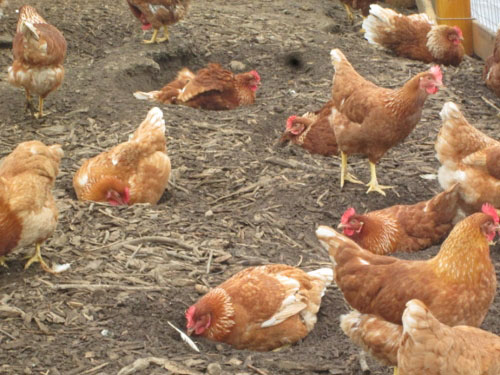
Hens in the winter garden
The hens are already enjoying dust bathing, scratching and just being in the Winter Gardens.

Cayenne – The #1 Emergency Herb

By Melody Horst

Cayenne is probably one of the most used herbs. It resides in almost every kitchen, and is used in hundreds of ways. Though cayenne is normally put in food, it is an amazing emergency help. I would like to emphasize that it is really good for the circulatory system. It helps to lower blood pressure, as well as increase it (though not at the same time, of course), it helps to stop bleeding (including very bad nose bleeds!), it stops strokes and heart attacks, helps thin your blood, and even can help colds and sore throats in the winter.

I’ll list out some of the different uses and why it works. But first, let me explain why I reference cayenne as an “emergency herb”. It’s because it works so incredibly fast on so many different things that could possibly severely harm you, as well as keeping you away from the doctor and all his huge bills as much as possible.

I was recently at the Mother Earth News Fair, where I heard Dr. David Christopher talk about the benefits of cayenne. Following are some things that I learned.

Bleeding

For external bleeding you can take cayenne orally or apply it straight to the wound. The cayenne will help your body to form a clot around the new hole in your circulatory system, and stop the bleeding. Back in 2013, several of us were at a fair, and Mom got a really bad nose bleed. The first aid people at the front entrance; couldn’t do too much for her, so someone called 911. When the paramedics got there, they said, “We don’t have anything in the ambulance that will help. We’ll have to take you to the hospital.”

Ridiculous, I thought. Any ambulance should be outfitted for something as common as a nosebleed! By now the bleeding had slowed down. We called Dad and waited for him to come before deciding what to do, so the ambulance left. By the time Dad got there (30 – 45 minutes later), the bleeding had stopped, and he and Mom went on home. If only we’d known about cayenne…

My brother Nathan’s sheep will sometimes hemorrhage while giving birth to their lambs. He puts cayenne in their mouth, and the bleeding stops almost immediately.

Strokes and Heart Attacks

Strokes and heart attacks happen when blood is not properly hydrated, and begins to clump (not clot—a clot is what forms over a lesion in the walls of your veins). When the clump comes to a place in the brain that it can’t fit through, it stops, and you have a stroke. What you want to do is put a dropper full of cayenne tincture in the person’s mouth (if they are unconscious, put it in drop by drop so that they don’t choke) or mix a teaspoon of cayenne powder in a glass of warm water and have them drink it down. If they don’t get better very soon, give them some more in smaller doses. The warm water will help get the cayenne to the blood quicker.  One time, my grandmother began having the symptoms of a stroke and almost passed out. My aunt put two droppers of cayenne tincture under her tongue, and Grandma quickly came back (she said she hardly felt any sting!). By the time the ambulance got there, Grandma was sitting up in a chair. When they asked her how she was doing, she said, “Just fine!”

High Blood Pressure

High blood pressure generally happens when there is a clog somewhere in the circulatory system that is keeping oxygen from getting to all your cells. The cells then sends out an alarm that they are lacking oxygen and your heart begins to pump harder to try to push the clog out of the way and get the blood to the cells. If you take medication for it, those poor cells will probably die. Taking half to one teaspoon of cayenne powder in a glass of water  will naturally increase circulation, taking care of the clog, and get the needed oxygen to your cells. Your heart will then resume its normal rate.

Colds and Sore Throats

Though this may not be everyone’s favorite remedy, it does work to take away sore throats, calm fevers, and take away the achiness of the flu.

Fire Water:

Cold and flu fighter

½ c. boiling water
½ c. apple cider vinegar
1 tsp. cayenne powder
1 tsp. salt

Stir together until the salt is dissolved. Add the vinegar. Take 1 tsp every 15-20 minutes until all symptoms are gone. It is important that you take it faithfully if you want to see the best results Note: taking a bite of bread and half a glass of water afterwards really helps the burning.

Aching Joints

For aching joints in general, mix one heaping teaspoon full of cayenne powder in a half cup of apple cider vinegar and shake well. Let it set for several days and shake often. Apply this to the joint and let it do its job. My brother used cayenne and honey mixed together on his aching wrist. He would apply it each night and bandage it up, and by morning it would feel a lot better.  For arthritis, try mixing cayenne into castor oil until it’s fiery red. You can then apply it to the aching area and bandage it up. There should be a noticeable difference within several days.

Other Uses

– Stomach Ulcers
Take half a teaspoon of cayenne powder in a glass of warm water every day.
– Shock
Put a dropper of cayenne tincture under the tongue, or drink a glass of warm water that has a teaspoon of cayenne powder mixed in.
– Hypothermia
Do the same as for shock.
– Cold hands and feet
You can sprinkle a little cayenne powder in your shoes or gloves before going out in cold weather to keep them warm.
– Headaches
Just this afternoon, my brother, Nathan, had a bad headache. He asked Mom for some fire water, and took it. Five minutes later, his headache was completely gone.
– Migraines
At the Mother Earth News Fair in Pennsylvania this year, we heard about using cayenne for migraines. A couple weeks later, Dad got an eye migraine. Mom put a squirt of cayenne tincture into a half cup of water, and Dad took one gulp. This was a very hot experience, and he wasn’t sure which was worse, the eye migraine or the cayenne! He laid down for a bit, but soon got up saying the eye migraine was gone. Now, I do not suggest that you take same the dosage that he did! About a 1/4 teaspoon to a glass of water should be sufficient. If it isn’t enough for you, then take some more.

Meet Your Farmers – Part 4

Luke

Age 16

Luke is our dairy manager and takes care of milking our two milk cows. He also enjoys doing mechanic work on our equipment and helping keep everything in working order. He has almost completed his required driving hours on his learner’s permit and is looking forward to getting his driver’s license this fall.

Luke plays mandolin and fiddle and enjoys singing bass. He also enjoys biking.

Melody

Age 14

Melody is our cat “manager” and is responsible to make sure the cat farm workers are adequately fed, but not feed too much that they get lazy and don’t take care of all the mice and rats. She loves cats and has them all named. She can often be seen holding a kitten or petting a cat. She is also one of her Mom’s right-hand helpers.

Melody is the right name for her. She loves to sing and has a good clear soprano voice. She also sings alto. Her favorite instrument is the piano/keyboard. Several months ago she bought an acoustic-electric bass and has learned to play it well enough to play it when we sing together as a family. She also enjoys writing stories.

Meet Your Farmers – Part 3

Joel

Joel

Joel (26), our oldest son, works full time on the farm. He is also beekeeper and the Heavenly Honey brand honey that we sell comes from his bees. Joel’s main responsibilities are running our feed mill, mixing the feed and feeding the chickens. He is our egg delivery person and is the one who delivers our eggs and BARC dog food to the stores each week.

When it comes to any problems that are computer related, Joel is the person that we turn to. He has a knack for understanding computers and how to fix them. He is also the webmaster and web designer for our websites. Joel also has an interest in health and helping others to be healthy.

Joel is a talented musician. His favorite instrument is a 12 string guitar which he often plays by ear. He also plays 6 string guitar, harmonica, and electric autoharp. He has written a number of songs and sings lead and tenor.

Nathan

Age 22

Nathan

Nathan, our second oldest son, is also working full time on the farm. His responsibilities include raising the pullets (young laying hens before they lay their first egg) and managing the pastures.

He owns the sheep and is a real shepherd at heart. Its amazing how he can tell the sheep apart and often knows who its mother is, or who the lambs are. The sheep have been thriving under his care.

Nathan is musically talented and plays the fiddle and sings lead, tenor, baritone and bass. Every day we hear his cheerful whistling around the farm.

Meet Your Farmers – Part 2

 Myron

Myron
I grew up in Gaithersburg, Md and have lived in the area since 1970. I have about four years of college, but I never completed a degree, nor have I really needed one. While in college, I worked in an accounting department and discovered that working behind a desk was not for me. I worked for 14 years in the Washington DC area as a finish carpenter and cabinet maker working on high end custom homes and additions. That gave me experience to be able to restore the house on our first farm and the house on our current farm.

I am the farm manager. This year, we have made some changes since we have a lot of good help on the farm. I am freed up from some of the day to day work to put more focus on planning, taking care of the finances, feed formulation for the hens, writing the newsletter, and other management responsibilities. I am a farmer at heart and still spend a significant part of the week working with the guys on various aspects of the farm.

As you may have realized from reading my articles in the newsletter, I love to research various subjects. We have a number of websites where I have published my research. In addition to farming and health related research, I have also done considerable research on spiritual subjects and issues facing the church. I am currently writing a book exposing the rampant sexual abuse of children and other failures among Amish and conservative Mennonites. Cathy and I both grew up in the Mennonite Church, but we no longer consider ourselves “Mennonite”.

I love farming and producing high quality, health giving food. I love learning, and what I am finding about the soil, farming, and how it relates to health, is like an unexplored pioneer frontier and adventure to me. Like George Washington Carver, I keep asking God to teach me and it is amazing the things that He reveals is the oddest places. I don’t feel like I have all the answers, because the more I learn the more I realize that life and farming is not as simple as I thought it was.

Daniel

Age 18

Daniel is our third oldest son and is working full time on the farm. His responsibilities include raising the broiler (meat) chickens, and taking care of the new baby chicks. While all of us guys do mechanic work, Daniel is the one with the most intuitive knack for seeing what is wrong with a machine or motor and how to fix it. It is great to have his mechanic skills here on the farm. He bought a fixer upper tractor and has been working on it and learning a lot about diesel motors. He is also a natural at doing electrical work.

He also built a blacksmith shop that we featured several years ago in a newsletter.

Daniel is musically talented and plays the accordion and sings baritone and bass. He also follows in his father’s footsteps by being a natural tease.

A Sustainable Farm that Isn’t

The hard, heart breaking reality that sustainable farming is not as sustainable as we once thought it was.

My heart ached as I stood at the edge of a field on another farm and looked at what had once been Salatin style pull pens, used for raising pasture-raised chickens. The pens laid smashed together on a pile in the woods. That style of chicken pen is named after the man who promoted the design and method. The pens at one time had been two feet high and 10 feet wide by 12 feet long. The pens are called pull pens because they are pulled across the pasture by moving them one pen length a day. It is a very labor intensive system. Almost every farm here in America that starts raising chickens on pasture uses this method. The method is romanticized and made appealing to new farmers.

A pile of smashed Salatin style chicken pens
A pile of smashed Salatin style chicken pens that had at one time been used for raising chickens on pasture. It represents the smashed dreams of two sustainable farmers, and the unsustainability of what is supposed to be sustainable agriculture.

The pasture where the             pasture-raised chickens had been raised
Turning around from where the above picture was taken, this is the view of what had once been the pasture where the pasture-raised chickens had been raised. The farm was located in Maryland State Park property. After the sustainable farm failed, the land (about 50 acres) has become a wasteland filled with noxious weeds, thorns, and poison ivy. About four years ago the Maryland Forest Service planted it in trees to reforest the land, never to be farmed sustainably again. The last crop that a farm grows is trees. (We have not yet been able to prove to the world that sustainable farming is the answer to feeding the world and that we are more sustainable than big corporate agriculture. We have more work to do.)

The farm, Full Circle Farm here in Maryland, went out of business over 10 years ago. The pile of chicken pens represents not only the labor of the farmers and their wasted funds, but it also represents the smashed dreams and hopes of a man and a woman who had been told that the system that they were using was the answer to conventional confinement agriculture. They thought they were practicing sustainable agriculture that would last and endure long after the conventional, confinement, big corporation chicken houses had gone out of business for being unsustainable.

Little did they know, as beginning farmers, that the method that they were using was not sustainable and that few people who would try it would be able to make a living wage with it. Most of them would quit after a few years.

I am writing this in hope that the many farmers and want to be farmers who subscribe to this newsletter do not make the same mistakes that I made and that Full Circle Farm made. I used to think that it was me that was having the problems and that others were being successful. I kept hearing glowing reports about how great everything was on other farms. But as I have observed things over the years, and from reading articles in Stockman Grass Farmer Magazine, I have pieced together that the profits were not there that those giving the glowing reports made it sound like it was. From my perspective, the reason that many sustainable pasture based chicken farms are no longer in business is not the farmer’s fault, but the fault of the system that they used. If you are experiencing some of these failures, it is not you, it is the system you are using. Chickens will not be super healthy just because they stand, sit, and sleep on the cold wet ground with grass on it 24/7. If we are going to have sustainable pasture based farms and last long after the conventional, confinement chicken houses have gone out of business, we need follow a different method.

There are a number of reasons why pull pens are not a sustainable method of raising chickens on pasture.

  • It requires too much labor for the few number of chickens that the farmer is raising to make a living wage. The pens have to be moved once or twice a day or the chickens will sit in their own filth. If you have 20 inexperienced apprentices running around your farm working basically for free, building and pulling pens is good grunt work to keep them busy.
  • The chickens are not protected enough from the heat, the cold, the rain and wet ground, and from predators. I will not go into details, but it is not a humane method. The death loss is too high. Every chicken that dies represents a loss of profit. The overhead costs and feed invested in the dead chickens are still there.
  • Because of the high labor input, it is difficult to have enough time in a week to raise, process, and market enough birds to be able to make a full time income. In other words, the hourly wage is below minimum wage. That is why most farms using the pull pen method stay part time or shut down. It is not profitable. They have to have off farm income to live on. For a sustainable farm to be sustainable, the labor input has to be low enough for the number of birds raised, to be able to raise enough chickens with a normal day’s work to make a living. Those that have promoted this method of pasture based farming have made it sound like the animals do most of the work. That is not true.
  • Pull pens are a micro version of confinement chicken rearing, only it’s on pasture. The chickens have very little space to move in their small pen.

Likely, unbeknown to the farmers at Full Circle Farm, there was another significant factor that may have contributed to them not being able to sell enough chickens to make a go of farming and be sustainable. The farmer who had taught them the method of raising chickens on pasture had a big name recognition and was illegally delivering chickens that were not USDA inspected across state lines into Maryland to customers relatively close to Full Circle Farm. At that time period in Maryland, Full Circle Farm could only sell their chickens at their farm because their chickens were processed under Federal exemption and were not USDA inspected. People had to go to their farm; the chickens could not be delivered to drop points like the other farmer was illegally doing. It is one thing for a farm to compete with a legal competitor, but it would have been very difficult for them to compete with a competitor with name recognition that was doing things illegally to provide what the customers wanted and taking business away from them.

The black market of illegal pasture raised chickens coming from Pennsylvania and Virginia into Maryland and Washington DC continues. If you are a farmer that is doing this, please stop. If you are buying this black market chicken, please stop. If the illegal chicken and illegal raw milk does not stop coming across state lines, it will endanger the sustainability of all pasture based farms.

For sustainable agriculture to be sustainable, the farmers have to stay in business. As sustainable farmers, we need to look out for each other and help each other and not take business from other sustainable farms by doing things illegally or misrepresenting our products as something that they are not. If you are a consumer, do not hurt the sustainability of the sustainable farms in your area by supporting the big guys (or the little guys) who are doing things illegally or are misrepresenting their products. One of the most common misrepresentations is a farm giving customers the impression that their chickens and eggs are organic when they are actually not feeding their chickens organically and are feeding non-organic feed. Non-organic feed is much cheaper than organic feed. Contrary to what you might think, a pastured chicken actually eats more feed than a confinement raised bird because they get more exercise and because they need to keep themselves warm during cool weather and on cold nights. It is important that the feed is organic.

Sustainable agriculture is a team effort of farmers and consumers. If we do not make sustainable agriculture sustainable, big business, confinement, “pasture raised” animal operations will be what is sustainable.

Related articles from past newsletters on this subject:
Sustainable Farming – The Farmer Has to Stay in Business
Our Quest for a Better and More Humane Way to Raise Chickens on Pasture
Our Quest for a Better and More Humane Way to Produce Eggs on Pasture

For those who are farmers
Here in the United States, much of the information that we have been given about raising chickens on pasture is outdated by 20 years or more. There have been a lot of advancements in the last 20 years that we as small growers have not kept up with. Europe with their free-range chickens, and the larger poultry breeders have a lot of beneficial information for us to learn from. Raising chickens on pasture is a lot more high tech in meeting their nutritional and other needs than we have been led to believe. Small mistakes in nutrition and management can end up costing a farmer a lot of money and may mean the difference between making a living and going broke. Here are some valuable resources that have been beneficial to us:
The following three books available from 5M Books – http://www.5mbooks.com/agricultural-books/poultry-books/poultry-signals-training.html
Poultry Signals
Broiler Signals
Laying Hens

Online Resources:
Ross 308 Broiler Handbook
ISA Brown Egg Layer Alternative Management Guide
ISA Brown Nutrition Management Guide
Hy-Line Brown Egg Layer Red Book – A Management Guide

Grass Fed is Best? A Horror Story From our Living Lab

To hear some people talk, you might get the impression that raising chickens and animals on grass is the secret ticket to success in farming and to health. With grassfed, there will be no more problems and the chickens and animals will excel far beyond conventional farming methods. Any grass is good. All you have to do is get the animals out on the grass, in the sunshine and fresh air.

That is not true.

Before you think I fell off my rocker, I will state that I believe that grass fed is BEST! But, as you will see, not all grass is best or even able to properly sustain life.

I was shocked and very disappointed with the large amount of weight loss that our sheep experienced after only 16 days in the new silvopasture. Two specialists from the Maryland Extension service, had visited the silvopasture just before the sheep were put into the new pasture. They were very impressed with what they called the “high dairy quality” of the grasses and clovers. They were concerned that the forage would be too lush, too rich for the sheep and that they might bloat (their stomachs fill up with gas) . On the contrary, the sheep did not bloat and we were in for a big surprise when we weighed the sheep.
The 54 Adult Sheep : lost (-345.5 lbs.) total in the 16 days between May 14 & 30, 2015. This number included rams (males), ewes (females) with lambs, and year old females that were not bred. Many of the nursing mothers lost 10 to 15 lbs!

The 48 Lambs: gained significantly less than they did the 16 days before they were turned into the Silvopasture:

Gain between 4/28/15 & 5/14/15 (16 days) = 465.5 lbs. an average of .61 lbs of gain per day before being in the silvopasture.
Gain between 5/14/15 & 5/30/15 (16 days) = 209.1 lbs. an average of .27 lbs of gain per day
Weight gain difference = -256.4 lbs.

While these weight losses were very disappointing, they showed how dramatically different pastures can be. Grass fed will not produce healthy animals and poultry if the soil is not built up properly. The main part of our farm, where the lambs gained the most, probably had the same quality of grass as the silvopasture eight years ago when we first moved here. We applied some principles that we learned from Carey Reams and some that we had developed on our own from some of his teachings and it made a dramatic improvement in the pastures. The main concept is that at least 80% of a plant’s nutritional food/energy comes from the air. By building up the soil and foliar feeding the plants with milk and honey, we were able to increase the amount that the plants were able to take out of the air. One of the main things that we did was to repeatedly mow our pastures and let the grass lay on the ground. We have explained this in some of our other articles.

I also need to add that there were also a few other things that likely contributed to the weight loss – over maturity of some of the grasses and grazing too long for the quality of the forage.

What was significant was that on the main part of our farm, the pasture alone, with no grain feeding, produced a weight gain of .61 pounds per day in the 16 days before the lambs went onto the silvopasture. That is exceptional for grassfed only and comparable to grain feeding.

Mike Neary, Ph.D., Extension Sheep Specialist at Purdue University says this about lambs in the 45 – 80 lb range, which was the size of most of the lambs that we put on the silvopasture: “Lambs with high to moderate growth potential that are fed a grain based diet with proper amounts of protein should gain from .5 to .8 pounds per day…
“If lambs are grown on high levels of forage [pasture], then one can expect slower gains than if fed diets with a high amount of grain. Gains for lambs grown on pasture will normally be from .25 to .5 pounds per day.” http://ag.ansc.purdue.edu/sheep/articles/feedlamb.html

During the 16 days in the silvopasture, the lambs averaged .27 lbs of gain per day which is at the bottom end of what Neary said is the expected gain for lambs on pasture. However, the results were actually worse than that. During the time that the sheep were in the Silvopasture, it appears that from the amount of weight that the lactating ewes lost, they gave the fat off their backs to their lambs and that is why the lambs gained and did not lose weight like their mothers.

Last week we weighed a few of the ewes and lambs when we were sorting out the lambs to take to the butcher. We were encouraged that they were gaining weight again. Those lambs had gained about .67 lbs a day in nine days. We do not have the data yet for all the lambs.

The lesson in all of this is that all pastures are not the same and will not give the same health qualities to the eggs, meat and milk that they produce. The same is true of fruits and vegetables in the store. They may look beautiful, but be lacking in the nutrition to adequately sustain life.

Sheep grazing what appeared to be very lush forage in the silvopasture demonstration plot.

The soil in the 8 acres in the silvopasture is about as chemical free as it will get. It has been probably at least 20 years since it had any chemicals or chemical fertilizers put on it. It also had not had any animals on it or any farming activity for at least 10 years before the silvopasture was established; therefore, it did not have the immediate negative affects of chemicals or bad farming practices. The forage specialists had recommended the grasses and legumes to plant to reduce the amount of tall fescue grass that was in the pasture. Tall fescue has a toxin in it that negatively affects sheep and cattle. Those grasses and legumes had been planted and looked beautiful as you can see in the picture.

In spite of the problems, I am looking forward to what we will be able to accomplish in the silvopasture. I feel that we have a solution, by repeatedly mowing the silvopasture to build up the soil. We also will be spraying milk, honey, and egg as a foliar spray to increase the photosynthesis and brix (sugar) of the pasture grasses and legumes. In the next three years, I believe that we will see a very significant improvement in the pasture growth and nutrition in the silvopasture, and a significant growth increase in the trees over the trees planted in the adjacent fields.

For me, the silvopasture gave me a reference point that showed that we had indeed improved our pastures from when we first moved to this farm.